Walk into any hiring manager's office in Dubai, Riyadh, or Doha today and ask what makes a candidate stand out. Nine times out of ten, the answer is not a degree or a certification. It is something far harder to teach. With Saudi Vision 2030 reshaping entire industries and We the UAE 2031 redefining the future of work, the soft skills Gulf employers 2026 shortlists are looking at have completely shifted. This guide breaks down the ten you must build, why each one matters, and how to show them on your CV and in interviews.
Why Soft Skills Matter More Than Ever in the Gulf in 2026
The Gulf job market is no longer a place where technical qualifications alone win offers. According to the Bayt.com Job Index 2025, more than 70% of GCC employers now place soft skills above hard skills when shortlisting candidates. The reason is simple. Tools, software, and platforms change every few years, but how a person thinks, communicates, and adapts stays with them for life.
The Vision 2030 and We the UAE 2031 Effect on Hiring
Saudi Arabia, the UAE, and Qatar are rebuilding their economies around tourism, technology, finance, and green energy. PwC Middle East research suggests that more than half of GCC roles created by 2030 will need workers who can collaborate across cultures, think critically, and lead change. National hiring goals like Emiratisation, Saudisation, and Qatarisation also push companies to invest in people who fit into transforming workplaces, not just polished CVs.
Soft Skills vs Hard Skills in the GCC Job Market
Hard skills get you the interview. Soft skills get you the offer, the promotion, and the long-term career. A coder in NEOM may know Python better than anyone in the room, but if she cannot work with a team made up of twelve nationalities, her output stalls. That is why in-demand soft skills UAE lists now read more like leadership profiles than entry-level requirements.
The Top 10 Soft Skills Gulf Employers Are Looking For
Here is the clean, ranked list that recruiters across the GCC keep returning to in 2026.
Cross-Cultural Communication: speaking and writing clearly across many nationalities and English levels.
Adaptability and Resilience: staying steady through fast policy shifts, mergers, and AI rollouts.
Emotional Intelligence (EQ): reading the room, managing stress, and respecting hierarchy.
Problem-Solving and Critical Thinking: making sound calls when data is messy or missing.
Collaboration in Multinational Teams: getting work done with colleagues from 100 plus backgrounds.
Digital and AI Literacy: using AI tools as partners, not replacements.
Leadership and Ownership: driving outcomes without waiting to be told.
Time Management and Prioritisation: handling Ramadan schedules, GCC holidays, and tight project deadlines.
Customer-Centric Mindset: keeping the experience sharp for residents, tourists, and global clients.
Cultural Intelligence and Arabic Workplace Etiquette: understanding majlis culture, greetings, and respect.
1. Cross-Cultural Communication
The UAE alone hosts more than 200 nationalities, according to the Federal Competitiveness and Statistics Centre. Saudi Arabia and Qatar are not far behind. Hiring managers want people who can explain ideas simply, listen actively, and adjust their tone for different audiences. A finance analyst in DIFC who can present the same report to a British CEO and an Egyptian junior with equal clarity is a quiet superstar.
2. Adaptability and Resilience
Sara, a Pakistani marketing executive in Dubai, told me her department restructured three times in eighteen months. She kept her job because she stopped resisting change and started leading it. That is exactly the mindset GCC employers reward in 2026.
Adaptability is not optional in the Gulf in 2026. Mergers, AI rollouts, and policy shifts happen faster here than in most global markets, and employers reward people who flex without breaking.
3. Emotional Intelligence (EQ)
LinkedIn Economic Graph data for the MENA region puts emotional intelligence among the top five skills employers list in 2026. EQ helps you handle stress before Eid deadlines, give feedback without bruising egos, and manage older managers in traditional sectors with grace.
4. Problem-Solving and Critical Thinking
Gulf workplaces move fast. Real estate, fintech, and tourism teams often face problems with no playbook. Employers want people who can break down a messy situation, weigh trade-offs, and recommend a path even when the data is incomplete.
5. Collaboration in Multinational Teams
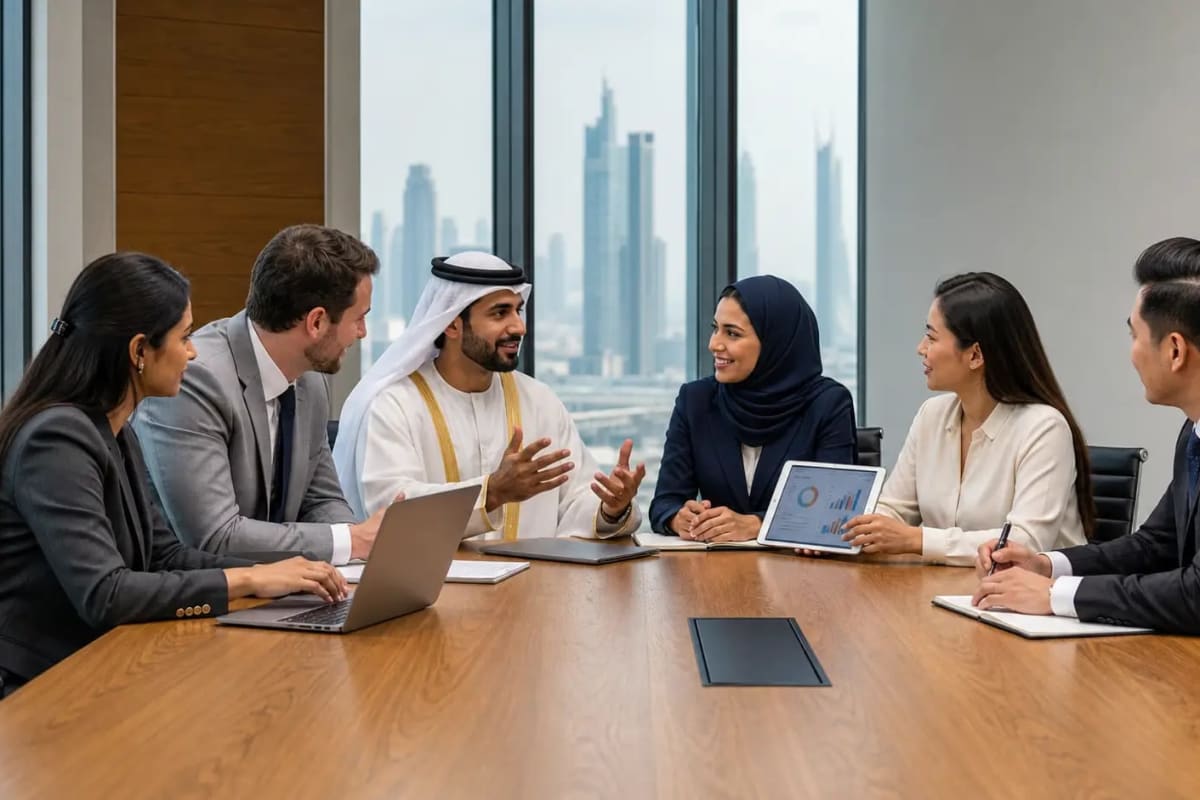
A team in Doha may include an Indian engineer, a Filipino designer, an Emirati project lead, and a Lebanese product manager. Soft collaboration is the glue. Listening, sharing credit, and resolving small frictions early is what keeps these teams shipping.
6. Digital and AI Literacy (Human-AI Collaboration)
The Dubai Future Foundation expects AI to touch nearly every white-collar role in the GCC by 2030. Employers no longer ask, "Do you know AI tools?" They ask, "How do you decide when to use AI and when not to?" Being able to write good prompts, fact-check AI output, and use AI to speed up work without losing quality is now a baseline.
7. Leadership and Ownership
Ownership is the new leadership in Gulf hiring. You do not need a manager title. You need to take a problem, see it through, and update people without being chased. Junior staff who behave like owners get promoted faster than seniors who wait for instructions.
8. Time Management and Prioritisation
Working hours shift during Ramadan, Friday is half-day in some firms, and project deadlines often clash with major holidays. Being able to plan around the GCC calendar and protect your deep-work hours is a quiet superpower.
9. Customer-Centric Mindset
From hospitality in Makkah to banking in Manama, GCC economies live or die on customer experience. Employers want candidates who think about the end user before the internal process. This skill alone separates good hires from forgettable ones.
10. Cultural Intelligence and Arabic Workplace Etiquette
You do not need fluent Arabic. You do need to know basic greetings, respect prayer times, understand majlis-style decision-making, and be sensitive to local customs. Expats who invest a few weekends learning this open doors that pure technical skill cannot.
How Soft Skills Map to Saudi Vision 2030 and Emiratisation
This is the section most career articles miss. Saudi Arabia's HRSD is pushing Saudisation quotas across banking, retail, IT, and professional services. The UAE's MoHRE has set Emiratisation targets of 2% growth in skilled roles every year through 2026.
What this means for you, simply put:
Companies must hire and retain local Saudi and Emirati talent. They need expats and locals who can mentor, train, and collaborate. Coaching and EQ become priceless.
Mega-projects like NEOM, The Line, AlUla, and Saadiyat Cultural District are run by global teams with local leadership. Cross-cultural fluency is not a nice-to-have, it is the operating system.
Government-backed programmes like Misk Academy in Saudi Arabia and Nafis in the UAE are actively training nationals on these exact ten skills. If you are an expat, you must keep up.
Save this section. Recruiters and HR newsletters quote frameworks like this often.
Sector-Specific Soft Skill Priorities in the GCC
Different industries weight the top ten differently. Here is what stands out in 2026.
Banking and Finance (DIFC, ADGM, QFC)
Critical thinking, EQ, and ownership rank highest. Compliance pressure means leaders need calm judgement under stress.
Hospitality and Tourism (Makkah, Dubai, Doha)
Customer-centric mindset, cultural intelligence, and adaptability dominate. Service is the product.
Technology and AI (NEOM, Riyadh, Abu Dhabi)
AI literacy, collaboration, and problem-solving lead. Technical skills are assumed; soft skills decide promotion speed.
Healthcare and Government
Communication, empathy, and resilience matter most. Public-sector hiring is human-first.
How to Show Soft Skills on Your Gulf CV and in Interviews
This is where most candidates lose the offer.
STAR Method for GCC Competency Interviews
When the interviewer asks, "Tell me about a time you led under pressure," answer in four short beats:
Situation: set the scene in one line.
Task: what you had to deliver.
Action: what you actually did.
Result: the measurable outcome, ideally with a number.
Power Phrases That Resonate With Gulf Recruiters
"Led a team of seven across four nationalities to deliver a project two weeks early."
"Reduced customer complaints by 40% in six months."
"Trained two Emirati graduates who were later promoted to senior roles."
These phrases hit ATS keywords that recruiters on Bayt, GulfTalent, and Naukrigulf scan for daily.
How Expats and Fresh Graduates Can Build These Skills
You do not need to spend a fortune. Try these practical steps.
Take LinkedIn Learning courses on EQ, communication, and AI tools (free with most GCC public library cards).
Enrol in free programmes from Misk Academy, Dubai Future Foundation, or Qatar Foundation.
Volunteer for cross-team projects at work to practise collaboration and ownership.
Join Toastmasters chapters in Dubai, Riyadh, or Manama for public speaking.
Read one short book a month on workplace behaviour. Build the habit, not the library.
FAQ
Cross-cultural communication, adaptability, emotional intelligence, AI literacy, and collaboration top almost every UAE recruiter's list this year, according to GulfTalent reports.
Saudi Vision 2030 has pushed leadership, ownership, problem-solving, and cultural awareness to the top of HR shortlists across banking, technology, and tourism roles.
Do not just list them. Show them with measurable results. For example, write "Improved team productivity by 25% by leading weekly cross-cultural workshops" instead of "Good team player."
For most non-entry roles, yes. Technical skills get you shortlisted, but soft skills decide who gets the offer, the raise, and the promotion in Dubai's competitive market.
Use free online learning, volunteer for diverse projects, learn basic Arabic phrases, and respect local customs like prayer times and majlis-style meetings to build cultural intelligence quickly.
Conclusion
The future of work in the GCC belongs to people who can think, feel, adapt, and connect across cultures. Hard skills will keep changing as AI evolves, but the soft skills Gulf employers 2026 are betting on, communication, EQ, ownership, and cultural intelligence, will only grow in value. Pick two from this list, work on them this month, and watch how quickly your career conversations change.
If this guide helped, share it with a colleague who is job hunting in the Gulf, and tell us in the comments which soft skill you plan to build first this quarter. Your next offer might depend on the one you pick.
Build the Soft Skills Gulf Employers Want
Get our weekly Gulf careers guide with CV phrases, interview tips, and Vision 2030 hiring trends.
Exact Saudization, Emiratisation, and Omaniisation rules for 2026, plus the seven ways quota compliance has rewired Gulf recruitment from requisition to offer.




![Safety Culture on Gulf Worksites: 9 Proven Steps [2026]](https://res.cloudinary.com/saad5690/image/upload/c_fill,w_800,h_450,g_auto,q_auto,f_auto/posts/k7vd3lnwrmhthtexmzfa)